


数据完整性问答:FDA最终确定指南
美国(FDA)本周三敲定了关于CGMP下遵守数据完整性要求的问答指南。
该指南更新了2016年发布的草案版本,并经过修订,来涵盖FDA当前对数据完整性考虑的额外信息,以帮助制药企业识别偏离,并实施最合适的处理方式以填补其数据完整性过程中的任何空白。
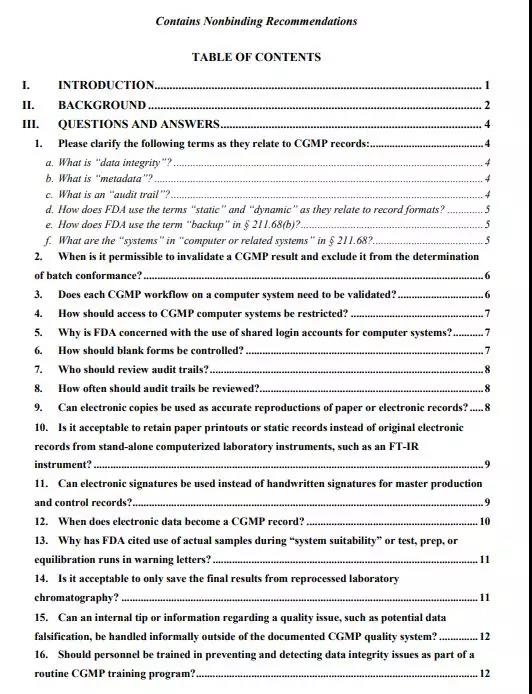
FDA希望所有的数据都是可靠和准确的。CGMP法规和指导原则允许灵活和基于风险的策略来预防和检测数据完整性问题。FDA提到,公司应该实施有意义和有效的策略来管理他们的数据完整性风险。
FDA表示,该指南是针对近年来在检查中发现的数据完整性违规行为增加而制定的,这些违规行为导致了FDA发出警告信、进口警报和裁决令。
该指南包括18个与数据完整性实践有关的问题和答案,并列出了隶属于21.CFR的210、211和212部分中管理数据完整性的规章的相关章节。
这些问题本身涵盖了一系列主题,包括如何限制对CGMP计算机系统的访问、如何控制空白表单以及应多久审查一次审计跟踪。
FDA还删除了指南中涉及小企业独立安全角色分配的部分,因为这个问题在另一个指南,PET药物-CGMP中涉及到。
Gottlieb表示,在过去的十年里,我们已经发现了药物质量数据和信息不准确的情况。这些情况会掩盖问题和隐藏失败。有时,数据完整性问题是欺骗性实践的结果。但更常见的是,它们是由于没有足够的过程和系统来确保可靠和准确的数据。在所有情况下,我们认为在数据完整性方面存在的任何问题都有可能导致患者用药安全的风险。
Gottlieb还指出,FDA与国际监管机构的伙伴关系,例如美欧关于GMP检查的相互承认协议,是FDA在识别数据完整性违规行为方面扩大影响的一种手段。
“随着行业全球化,FDA扩大了与国际监管部门的伙伴关系。这允许我们定期交换在世界各地的设施中被观察到的关于质量和数据完整性相关的违规的信息。
原文:
The US Food and Drug Administration (FDA) on Wednesday finalized its questions and answers guidance on complying with data integrity requirements under current good manufacturing practice (CGMP) for drugs and biologics.
The guidance updates a draft version released in 2016 and has been revised to include additional information on the agency’s current thinking on data integrity to help drugmakers identify lapses and implement best practices to shore up any gaps in their data integrity processes.
“FDA expects that all data be reliable and accurate. CGMP regulations and guidance allow for flexible and risk-based strategies to prevent and detect data integrity issues. Firms should implement meaningful and effective strategies to manage their data integrity risks,” FDA writes.
FDA says the guidance was developed in response to an increase in data integrity violations observed during inspections that have resulted in warning letters, import alerts and consent decrees in recent years.
The guidance features 18 questions and answers relating to data integrity practices and lists the relevant sections of the regulations governing data integrity under 21 CFR parts 210, 211 and 212.
The questions themselves cover a range of topics including how access to CGMP computer systems should be restricted, how blank forms should be controlled and how often audit trails should be reviewed.
FDA also removed a section of the guidance that covered independent security role assignments for small operations because the issue is covered in another guidance, PET Drugs—Current Good manufacturing Practice (CGMP).
“Over the past decade, we’ve uncovered situations in which drug quality data and information are not accurate. This can mask problems and failures. Sometimes, data integrity concerns are a result of deceptive practices. But more commonly, they’re a result of inadequate processes and systems to ensure reliable and accurate data. In all cases, we regard any lapse in data integrity as a risk to patient safety,” said FDA Commissioner Scott Gottlieb.
Gottlieb also pointed to FDA’s partnerships with international regulators, such as the US-EU mutual recognition agreement on GMP inspections, as a means of boosting the agency’s reach when it comes to identifying data integrity violations.
“As the industry has globalized, we’ve expanded our partnerships with our international regulatory counterparts. This allows us to regularly exchange information about quality and data integrity related violations if they’re observed in facilities around the world,” Gottlieb said.